Carrie, sympathy for monsters, and Mike Flanagan's messy series
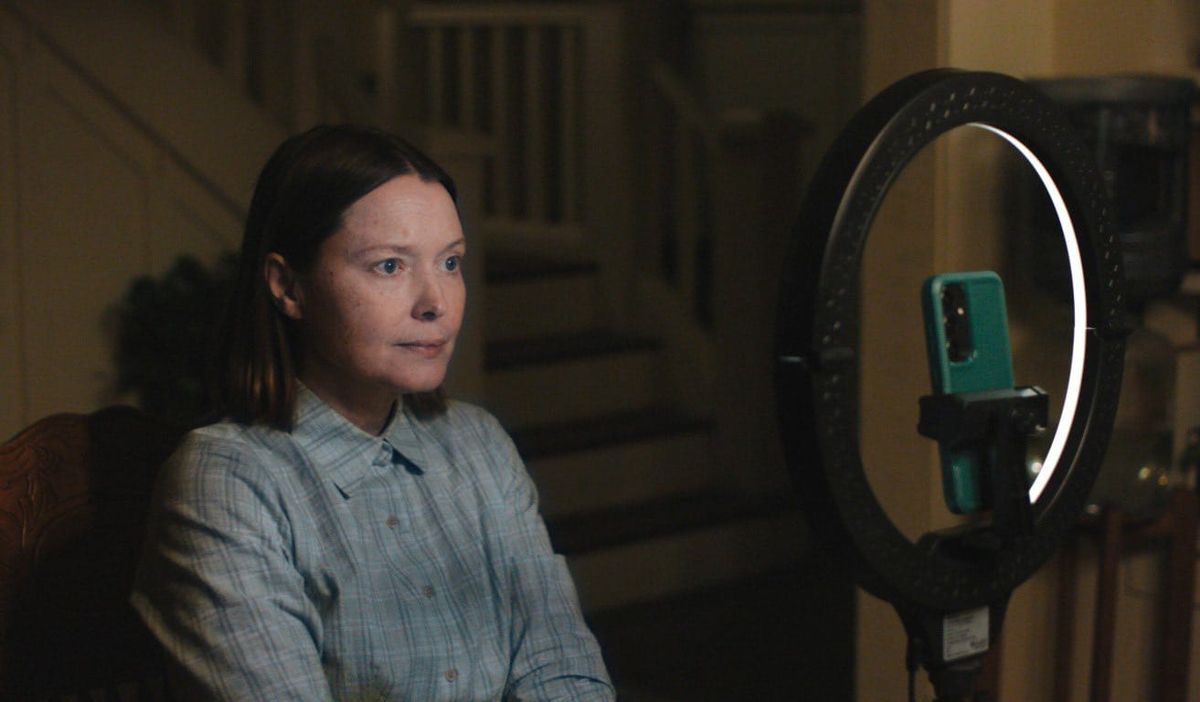
I saw Mike Flanagan's Carrie television adaptation. Initially, I was not intrigued, despite being a Stephen King fan, though I’m admittedly not a fanatic (I have maybe only read 20 - 25 of his many books). But whenever we cover a Stephen King book on You Are Good, it is policy that we read the book or story in addition to covering the movie. He is the only author we have that policy for. He was formative for me and for the show itself.
[Spoilers ahead]
I didn't want to watch it. In fact, I'm a little allergic to the streamer phenomenon of turning existing film or book-length IP into a series. Carrie is one of King’s shorter books and the show has 3 to 4 times the run-time of the already excellent De Palma movie. Sometimes people aren’t totally sure what to put in all that extra run time. They get clumsy. There have been, though, great exceptions. I loved The Leftovers. Its first season was faithful to the book, and then the second and third seasons expanded into their own universe with insights from the author. Another is Watchmen (which shares an overlapping creative team with The Leftovers, which had a similar team and told its own story. To me it felt faithful and rooted to the original text, though it's my understanding that Alan Moore did not have warm feelings about it.
Speaking of King, this speaks to the Shining phenomenon. Adaptations can be great and can speak to the themes that were in the original text without being faithful to the author himself. Think The Shining. The book resonates with me in an extraordinary way, especially in what I believe King was saying about addiction (and in the sequel recovery). What Kubrick does is fascinating. He takes from the text to create something beautiful, something powerful, something stunning, with themes that were there but not necessarily King’s primary focus. But if I wrote a book that personal and saw an adaptation get made and celebrated that was so divergent from how I originally meant it, I too would probably be frustrated with that outcome and process.
[Side note: one time I met Stephen King at a sandwich shop in Maine called Amato’s. Mainers will know what Amato’s is. This was while I was a newspaper columnist for the Bangor Daily News. I was waiting for a sandwich and I saw him standing there waiting for his, and no one was talking to him. But I knew it to be Stephen King. It’s obviously Stephen King. I was looking around in disbelief that there was no engagement with him. This was down in Gorham, not up where he lives, so a couple of hours away from where he’d normally be. But again, I was in disbelief. So I waited until they called his name, and they called out, “Sandwich for Steve.” Finally I went up to him. The Shining was an extremely important book in my understanding of my own relationship with drugs and alcohol. Formative. It literally changed my life. I talked with him very briefly and said, “I just want to let you know The Shining changed my life.” He said, “Me too,” and he laughed. Then he reached out and shook my hand. He was very, very kind and said a couple of things. I went to go sit and eat my sandwich and thought that would be the last of it. Then about 15 minutes went by and he stopped back over to my table, which he had to go out of his way to get to because the exit was on the other side of the building. He made chitchat and small talk and let me know he was going down to New York for a thing, so he was driving through the area. It was a very sweet interaction that I think about often. A lot of kindness, and a generosity of time from someone who does not have to be generous with their time at all.]
Mike Flanagan has been extremely competent in the realm of adapting Stephen King for the screen, and has been celebrated as such. I really enjoyed Gerald's Game. I believe his adaptation of Doctor Sleep, which is another of my favorite Stephen King books, is quite good. But there is something about the style that does not always sit right with me, though I can't quite nail down what it is. There's something about the aesthetic that feels plasticine, or slightly uncanny valley. That is true across my experience with Flanagan movies and shows generally. They are not always for me.
But again, he has been celebrated for his faithfulness in adapting King. It could be noted that this is not necessarily a feat in itself, though it is rare to make both enjoyable and generally faithful adaptations. King adaptations are real hits or misses, and the hits often happen when directors take some liberties with the original text.
While I was not originally interested in watching it, in classic form, I became intrigued when I saw some discourse about it. I wanted to better understand how people were receiving the story. I especially wanted to understand the experience of people who were coming to know Carrie White for the first time via this specific adaptation.
I was surprised to see a number of passing takes suggesting that Carrie was "the villain.” I'll explore that arc more shortly. I also saw her described as a stand-in for school shooters, with some level of unease about the sympathy the narrative extends to the character in that context.
I then posted something about my surprise, despite having not seen the show. I was surprised to see people identifying Carrie as the primary villain, and surprised at the unease about the sympathy. In my experience with the novel and the movie, part of what makes it remarkable is that there is a sympathy extended to the monster we see be created. It is as much about the systems and conditions that create monsters as it is about the monster itself. There is no one villain in Carrie as I had experienced her to that point. That is part of the power of the book. That is part of what makes it worth celebration. That's part of what makes the movie worth celebration.
Of course, iconographically, Carrie is the protagonist monster and has become aesthetically iconic in part because she can be turned into a Halloween costume. You wear a dress and you have blood on you and you are Carrie. Pulled out of context of the text itself, this is the villain from Carrie. I get that.
The post got some traction. A number of people responded with either "people are stupid and can't read and don't understand media and media literacy is bad" or "well, she killed all those people" as though I was making this point and would be surprised to find that Carrie killed people.
It’s worth noting that there are frustrating things about prior adaptations, and about this adaptation, that are part of the conversation that also emerged from the so-called discourse. For one, Carrie is described in the book as more physically off-putting, from a conventional beauty standpoint, than she is portrayed on screen. This criticism goes all the way back to De Palma's movie, and it is certainly true of this adaptation. What does it mean to soften the homeliness (in the parlance of the 1970s) of the character in order to help garner more sympathy for the character? This is an important question.
I did go into the show thinking about specific tensions within media literacy. It has always existed, and it is probably worse than it has ever been in this age of algorithmic sorting of takes and opinions. Audiences struggle with the difference between a sympathetic exploration of how a person gets to a place and an endorsement of what that person does when they are in that place. I had not yet seen the show while this was on my mind. But I believe that.
I also know that there are a number of people who, unlike me, are experiencing this character for the first time in a post-Columbine world. This led me down a rabbit hole of seeing how far back school shootings go. Of course I knew about the Charles Whitman shooting in the '60s. But even I was surprised to see school massacres going all the way back to the turn of lass century.
Regarding the pre and post Columbine high school experience, for people my age, there was a year or two when there was a smattering of school shootings. Then suddenly Columbine made a promise that this was something everyone was going to live with, to some extent, for the rest of their lives. I am not watching this show through the eyes of people who have that experience. I experienced Carrie prior to that phenomenon before experiencing the emergence of the phenomenon in real time.
I experienced Carrie as the character I understood by way of Stephen King and De Palma, where so much of what she is going through is about rage and alienation. (I also understand that King has an explicitly school shooting novel called Rage that I have not read, and which has gone by the wayside since the rise of the post-Columbine era.)
There is something I feel uneasy with when it comes to seeing her as a stand-in for school shooters, beyond just that cultural phenomenon not yet existing when the book was written. The myth of the school shooter as bullied outsider is itself a fabrication that was born of coverage of Columbine. What it covers up is largely a phenomenon of nihilistic, predominantly male lone wolf terrorist attacks that are unsettlingly often rooted in some form of domestic violence or resentment about gender and power. (And this extends beyond school shooters into general mass shooting events.)
As the book goes, at least, the question is what conditions would lead to a young, naive girl's murder-inducing alienation. Those questions are examined pretty deeply. And she's not always sympathetic herself but the book maintains a sympathetic enough view to understand her experience.
The bullied-kid-pushed-to-murder myth is often used to obscure what is often an incel or incel-aligned pipeline to mass murder. Gender and power are extraordinarily important contextual markers. As recently as 4 days ago, an “incel adjacent” teen was arrested for planning a mass shooting. I posted something about this the other day and I knew I struck something of a cord when men who appear to exclusively follow other men, self-proclaimed nationalists and second amendment fetishists expressed disdain and invited "debate."
Part of what makes the book remarkable, for all of King's documented blind spots, is that it feels sort of refreshing that a man, especially in the 1970s, was capable of maintaining the empathy and perspective that would help put Carrie's specific rage into some sort of understandable context.
I think that in some part, distantly, the existence of Carrie as a sympathetic narrative—one in which a bullied kid does a big bad thing—may have helped contribute to the myths about the "bullied school shooter." Those myths were imperative to the allure of the Columbine myth, which was later discounted by Dave Cullen's reporting.
Set aside where the popular Carrie narrative leaks into popular consciousness and myth-making about actual crimes. Set the uncomfortable parallels aside too. Even if Carrie is a school shooter stand-in and the story asks us to take a sympathetic viewpoint without forgiving her actions, I don't necessarily see what is wrong with being challenged to do so. Alienation, loneliness, and isolation are not the sole reason people arrive at these places, but they are reasons. Again, I believe the disconnect or frustration comes from people believing that being asked to take a sympathetic view is the same as being asked to endorse the final action.
I think people are unsettled, in ways that I understand, by being asked to maintain a sympathetic understanding of how people arrive at creating the circumstances of terror. Those circumstances keep every one of us, at least those of us who live in the States though this phenomenon grows beyond our borders by the year, terrified in the back of our minds about being in a public place, about being trapped in a school, and so on. I very much understand that conceptually and in my actual experience. There were full days I missed from school at the emergence of the Columbine era because I did not feel comfortable just being in school. It felt like you were next at any given moment. I am aware that this has only gotten worse. Something we see in the television show is the traumatizing process of preparation that kids are asked to go through. The question is also asked: what are these conditions doing to everybody?
There is so much I enjoyed about the Flanagan series, though I left with disdain for it. The disdain comes from seeing how much I felt the series got right before it veered into creating a new narrative around the prom massacre in the last episode. This is a common complaint among many who have seen the show.
There are new characters and new plot lines that really don't do the show any favors with regard to maintaining that space for understanding how alienation can lead to rageful nihilism. Rather than exploring agency and the lack thereof, we are now introduced to a cabal of psychics. It felt silly, and it felt disorienting after what I thought was a very well-played reimagination of the conditions that lead to the feelings Carrie has by the time of the prom. In the case of the book and the original movie, having a power that is influenced by mismanaged rage, and that can burn stuff down, puts one in a precarious position.
When people say, "well, imagine if she went out and got a gun rather than used psychic powers" I feel it's not a good comparison for the Carrie we have known, though also it’s been a couple of years since I last read the book. Her power is something she is equipped with mentally. There is no effort required to acquire it. And the power is, in addition to being literal, a metaphorical device to speak to the normal changes innate to puberty. Outside of setting the scene for bullying, the fact that Carrie is menstruating for the first time with no awareness of what is happening to her body serves as a metaphor for the terror that can come alongside these unexpected changes. The book is an exploration of feelings, newly unwieldy. It's an exploration of loneliness. It's an exploration of rage. It's an exploration of bullying. It's an exploration of all of the conditions that themselves make a collective villain and lead to the creation of a monster.
Sure, technically Carrie is a villain. If you see the story from the perspective of one of the random students who are at the prom, or of the town, you see the creation of the villain that is going to be your undoing, whether or not you were a part of the villain's creation. But as a text, Carrie asks you to consider, even if you are a bystander, what role you have in her creation, if any, even in passing. What responsibility do you have in the conditions that create these monsters?
A lot of the confusion about what a villain is comes from a belief that we are all exempt from any sort of judgment, self-criticism, or internal examination of our contributions to these systems. This is not to say that people who are killed tragically in mass shootings are all partly responsible for their tragic plights. For its faults, the show does a pretty good job of considering that even the perpetrators of the conditions working against Carrie are themselves tormented by those conditions as well. We are all part of systems, in some way, that lead to the alienation we see Carrie experience in Carrie. Not everybody is a villain, but everyone has some proximity to the systems that help create the sort of villainy we see in the form of a rageful Carrie White. And “guilt” or “innocence” isn’t always black and white, and it requires some level of self-interrogation to understand.
I hated the turn at the end because of what I thought the show did really well beforehand. It looks at what factors of alienation take place today, which look much different than they did in the '70s, when the story was originally written and originally adapted.
I was especially taken by the portrayal of Margaret, Carrie's fanatical mother, and by the softening of her fanaticism in this telling. I've seen people express frustration that the religious psychosis was stripped from her character. That is, to them, an important factor in the creation of this monster as we have known her. But I think what is just as important and worthy of examination now is that she operates wholly narcissistically, and unaware she is doing so. Everything she does is in some sense an aspiration to control the things around her. The reasons are understood. I imagine they make sense in the context of what her marriage likely looked like, what conspiratorial ideologies they operated on in that house, and so on. But everything she does is in the name of grasping for control.
She sees that Carrie is going to make clothes for herself—an act of self-assertion and claiming of personal identity that reaches outside of Margaret’s influence—and she asks Carrie to make clothes for her instead. She hopes that the labor will displace Carrie's aspirations to do something for herself for one more day.
I appreciate that Margaret is herself portrayed sympathetically in ways. She is a villain, but also part of a villainous system. She is horrified by the modern conditions of schooling in ways that are resonant. She is demoralized by work at the box stores that long ago replaced more community-friendly local shops. It is interesting to see the world through her eyes, because she is horrified by the conditions of capitalism (as represented by her workplace and the school and Chris’s father) though she would likely not articulate it as such. But because she is sympathetic does not mean her actions and approaches are themselves to be endorsed.
I saw somebody celebrate Margaret for going to bat for Carrie when she's getting bullied. This misses entirely the fact that Margaret's approach, which involves her becoming a moderately small-audience influencer, is entirely self-serving. It's wholly narcissistic. Each of her actions is entirely about her. This is about her struggle. Lost in that is a recognition of her daughter's personhood, and Carrie speaks to this anger.
Every time Carrie tries to speak to someone about what she is going through, it is lost in some sort of systemic failure, or failure on the part of the individual, to hear her distress. We see it from a legal perspective. We see it from a parenting perspective. We see it from a peer perspective. We see it from a school administration perspective. There are other perspectives I'm sure I'm missing.
Again, I am really fond of how Margaret is portrayed because it feels real. Highly wound narcissism is its own form of control and psychosis. Or it can have similar effects on the people who live under its sway and in its immediate universe. We have given platform and power to people who are effectively in some form of psychosis. In fact, the content they are disposed to make is the sort of content that is most rewarded by algorithms. I was glad to see that illustrated by way of Margaret. Our fanatics don’t always look like the “They’re all gonna laugh at you!” Margaret White of the 1970s. Often they come seemingly measured and saying things that make some degree of sense until you start interrogated what they’re actually saying, or asking what they stand to gain from saying it.
The show squandered all of the things I think it did right with regard to illustrating how we arrive at a modern Carrie, and how we arrive at the prom massacre. It did so in trying to build a universe that, based on interviews with Flanagan, will continue on in future seasons.
The additional forces the show creates include a scene that helps me better understand where people's frustrations about the school shooter allusion come from. Carrie goes with someone we are led to believe, for quite a while, is an imaginary friend to a sand pit. If you grew up in a rural area, you know a sandpit is where target practice happens. And Carrie uses her power specifically to imagine taking out her enemies. VHS video exists of the Columbine massacre perpetrators engaging in exactly this exercise. This confuses the matter of what is rage spontaneously boiling over in the moment of being pushed too far and what is premeditated score-settling.
It's worth considering the parallels, and the reason why I draw a distinction. Of course there have been school shooters who were women or queer. They sit as narrative outliers to the phenomenon I think people imagine when they say "school shooter." It is not to push these phenomena aside, as they should also be understood within their own contexts. But when we collectively say “school shooter,” we are often referring to a man young man, and there is often some relationship with an incel-adjacent idea about gender resentment, expectation, and control. This was the case even before the label “incel” was claimed by a community. There is a related target, and there is surrounding fallout that comes from the exacerbated nihilism.
This is essentially, as I said above, a lone wolf terrorist attack that we have for some reason given its own category and classification. Part of this may have emerged from the myth that it is a bullied person pushed too far. There is, alarmingly often, a connection between mass shooting events, misogyny, and domestic violence.
It is important to note the parallels in that Carrie's primary target is her mother, who herself becomes a target of Carrie's rage. She is also the origin-point of said rage. In another frustrating twist, the show takes Margeret’s death out of Carrie’s hands. This further confuses what it's trying to say about school shootings, if it's trying to say anything at all, or if it's just using aesthetics of school shooting phenomena in order to paint a picture. But Carrie's frustration is against her mother because her mother is the villain, or one part of what makes up the force of villainy against her. This is not ultimately true of the women who shooters imagine have spurned them in some way – to whom the resentments of their murderers have been bound. The softening of Margaret’s abuse, while a welcome element, makes this land a bit more ambiguously.
Some people feel compelled to stick with the idea that Carrie is essentially a 1:1 stand-in for school shooters, which I especially understand with regard to this adaptation. They appear frustrated with being asked to sympathize with her on those terms. For them, I think it's important to ask some questions that go beyond just feeling satisfied to say, "well, if you put a gun in her hands, then she's a school shooter." What does she share in common with them, and what does she not? What conditions does she face that push her? If I am to grant her the sympathy that at least the book and the film grant her, what questions does that make me ask? And what is it about the school shooter phenomenon that shuts my brain off entirely from asking, with some degree of sympathy, how people arrive in that place?
Perhaps that comes from believing that every person who has been involved in a school shooting is ultimately evil and not worth examining or understanding. But that gets us no closer to anything outside of just believing evil exists as a supernatural force in the world and for some reason it’s pretty highly concentrated in The United States.
I think a scarier question is about our systems, and this goes beyond just access to guns. What about our system has made alienation and despair, and very often a nihilistic level of misogyny, so common? What about our system has made that a daily occurrence? How did this become normal? How does one find themselves in that position, beyond assuming that they are ultimately evil and without agency? Because they do have agency. So what does somebody go through in order to arrive at that place?
I think Carrie, in its best forms in book and film, asks us to consider that. What makes the television show so frustrating is that it renders that question moot by way of its sloppy attempt at world-building.